
Why we invested in Spiral Hydrogen
New Paradigm of Hydrogen Production.

Hydrogen quietly underwrites the modern industrial economy. Around 100 million tonnes of it are produced every year, feeding ammonia, refineries, steel mills, and methanol plants, adding up to a €200B+ global market. Almost all of it is grey: made from fossil fuels, releasing roughly 10kg of CO₂ for every 1kg of H₂. Together, hydrogen production accounts for close to 2% of global emissions before a single industrial process even begins.
For two decades, green hydrogen (hydrogen made by splitting water with renewable electricity) has been the obvious answer and the obvious disappointment. The technology works. The economics don't. Green hydrogen costs €4–10/kg today versus $2–4/kg for grey, a 2–5× gap driven by three structural problems: expensive electricity input, electrolyzers that lose 30–40% of that input to inefficiency (largely from gas bubbles clogging the reaction), and capital-intensive balance-of-plant systems (pumps, cooling, wiring, grid interconnection) that swamp the stack itself.
The market has noticed. Sentiment around green hydrogen is at a multi-year low. Ørsted has divested mega-electrolyzer projects. Universal Hydrogen went bankrupt. Green Hydrogen Systems folded in Denmark. US IRA subsidies are under threat, EU subsidies are softening, and most climate VCs we spoke to over the past six months told us some version of the same thing: stay away unless someone shows up with an absolute killer breakthrough.
That's exactly why we're excited.
The prize sitting on the other side of cost parity has not moved. If anything, it's grown. The moment a company can produce green hydrogen at <$1-2/kg, they don't need a premium, a subsidy, or a new market. They get to walk into a $200B+ industrial market that already exists, where customers are ready to switch the day the price works. As one hydrogen market expert in our diligence put it: "if someone built a plant with these and were ready to sell at below $2, we have portfolio companies who will commit to buy it via real binding offtake agreement."
The market isn't waiting for demand. It's waiting for a technology that delivers.
Meet Spiral: a centrifugal, bubble-free electrolyzer set to deliver the cheapest hydrogen globally
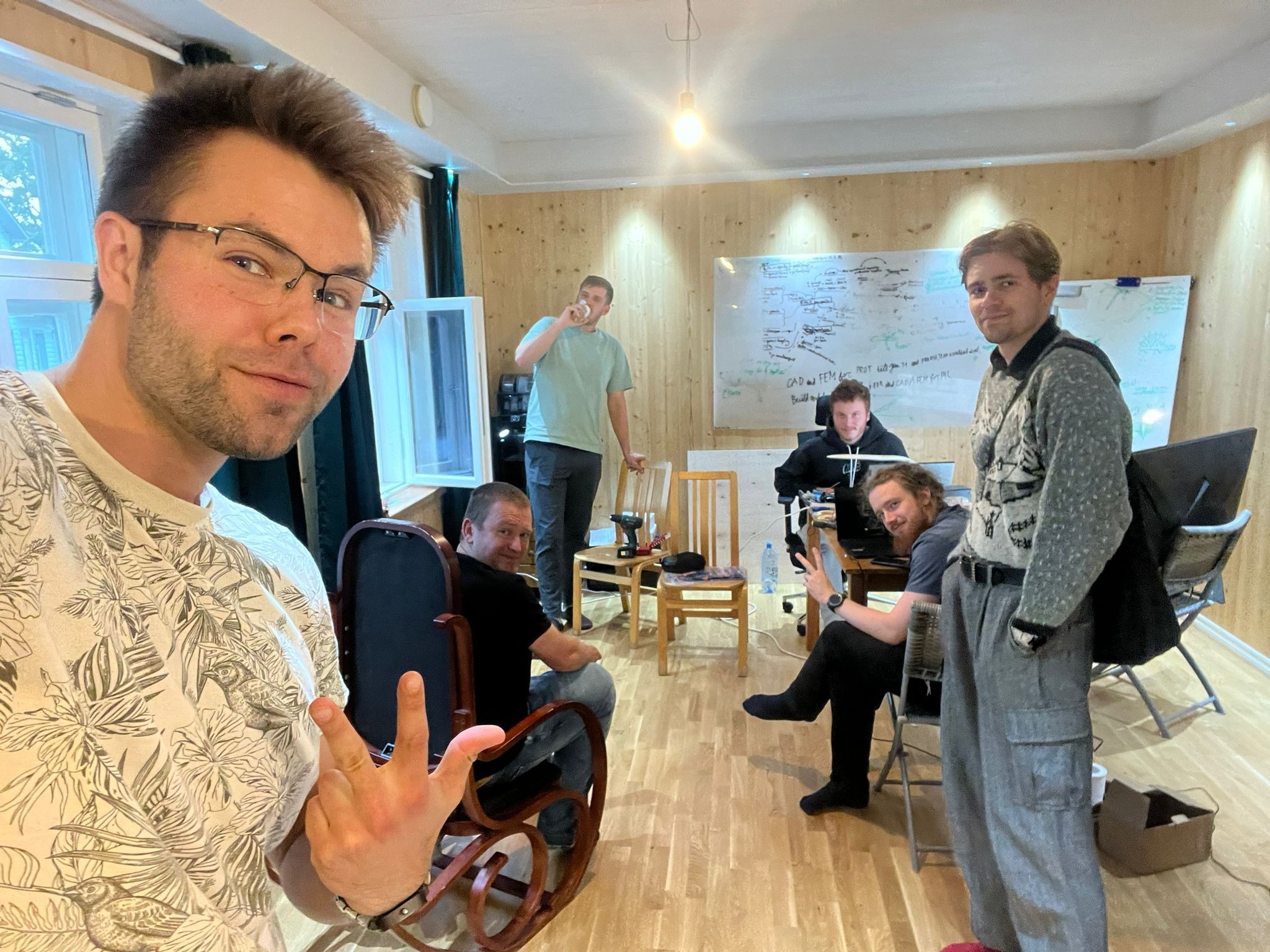
Founded in 2024 in Tartu, Estonia, and now building its pilot site in the Port of Rotterdam, Spiral Hydrogen is the Estonian-Dutch deep-tech company behind what could become the cheapest hydrogen production system in the world. Their flagship design is a centrifugal, bubble-free electrolyzer that attacks every component of the levelized cost of hydrogen (LCOH) at once.
Conventional alkaline electrolyzers run at 60–70% efficiency, largely because gas bubbles cling to the electrodes and choke the reaction. Spiral's centrifugal architecture removes the bubbles, pushing efficiency above 90%, territory previously reached only by Hysata, the Australian deep-tech that has raised over €150M chasing the same north star with a different approach. Around that core insight, Spiral has built an integrated system that simplifies the balance of plant and dramatically reduces the cost of the stack itself, protected by a portfolio of patents. The result is a system that's not only cheaper, but materially more energy-dense and modular than conventional electrolyzers, opening up use cases where space, weight, and form factor have been hard constraints.
Stack the efficiency gains and the system simplification, and Spiral's path leads to a green molecule cheaper than grey hydrogen. If they get there at scale, they don't have to fight for premium offtake, beg for subsidies, or wait for regulation. They can become the cheapest hydrogen on Earth.
Why them
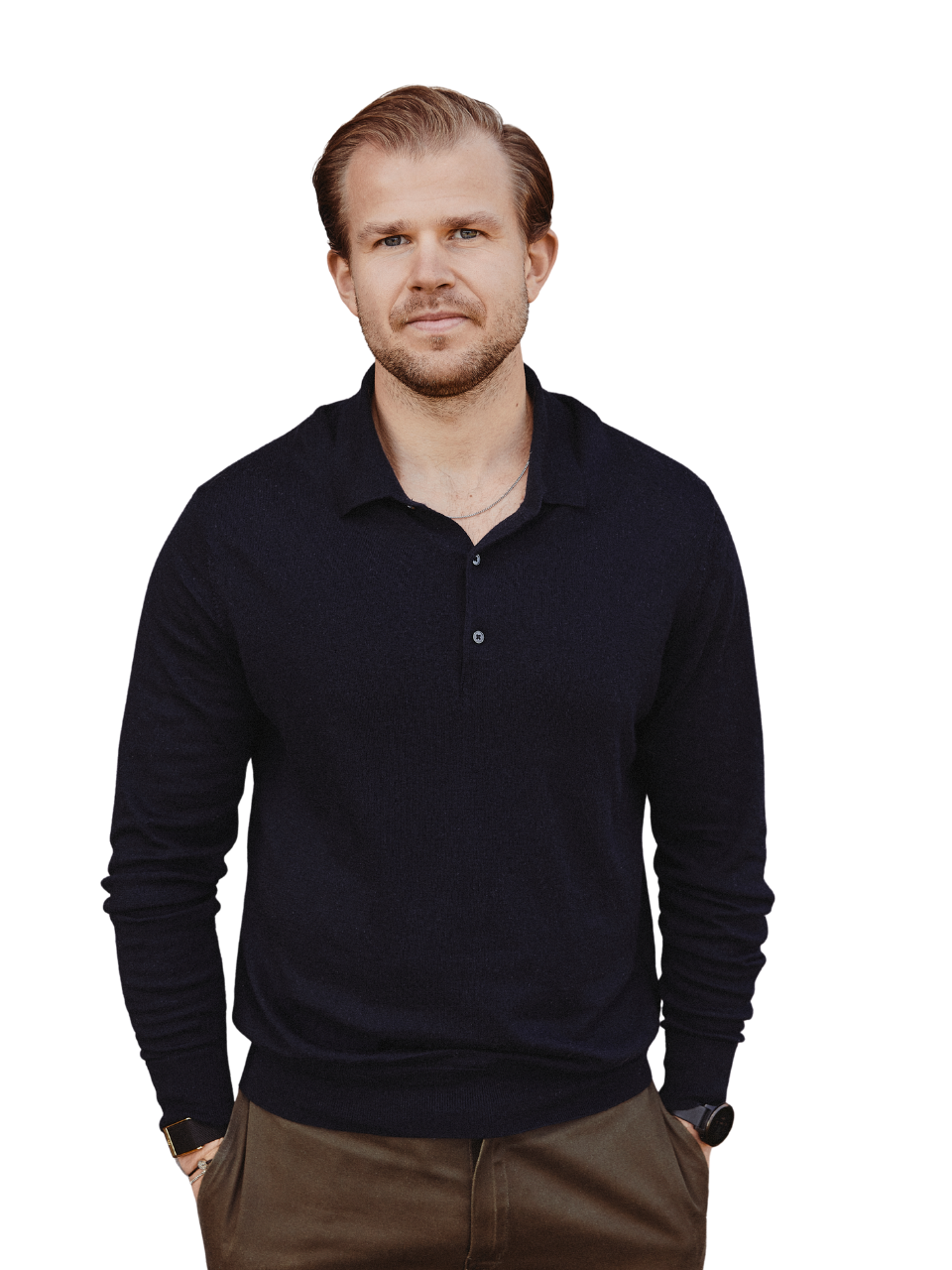
Juri Volodin, Spiral's founder and CEO, comes from a multigenerational family of engineers and physicists. Some of his ancestors were among the first electrical engineers in Estonia, building power plants and factories. His father ran startups and worked on nuclear reactors before becoming a farmer. Juri grew up on that farm, won Estonia's National Chemistry Olympiad at 16, and was one of four students chosen to represent Estonia internationally. He went on to combine physics, chemistry, and materials science with dual master's degrees in wind energy and electrical power systems, exactly the unusual cross-section needed to reimagine an electrolyzer.
When he set out to build Spiral, he designed and ruled out nearly 200 theoretical systems before arriving at the centrifugal breakthrough. Around prototype #180, on the verge of giving up, he found it. Since then, he has built several physical prototypes, validated >90% efficiency in lab conditions, filed three patents, and signed his first paid pilot through the Port of Rotterdam.
"Juri is f***ing amazing on the tech side. He's clearly an exceptional founder, technical genius and intense underlying drive to change the world… good enough to invest in as a pure founder bet, and the technology is very cool."
— byFounders Collective member Troels Tschonfeldt, founder of Saltfoss & Hyme
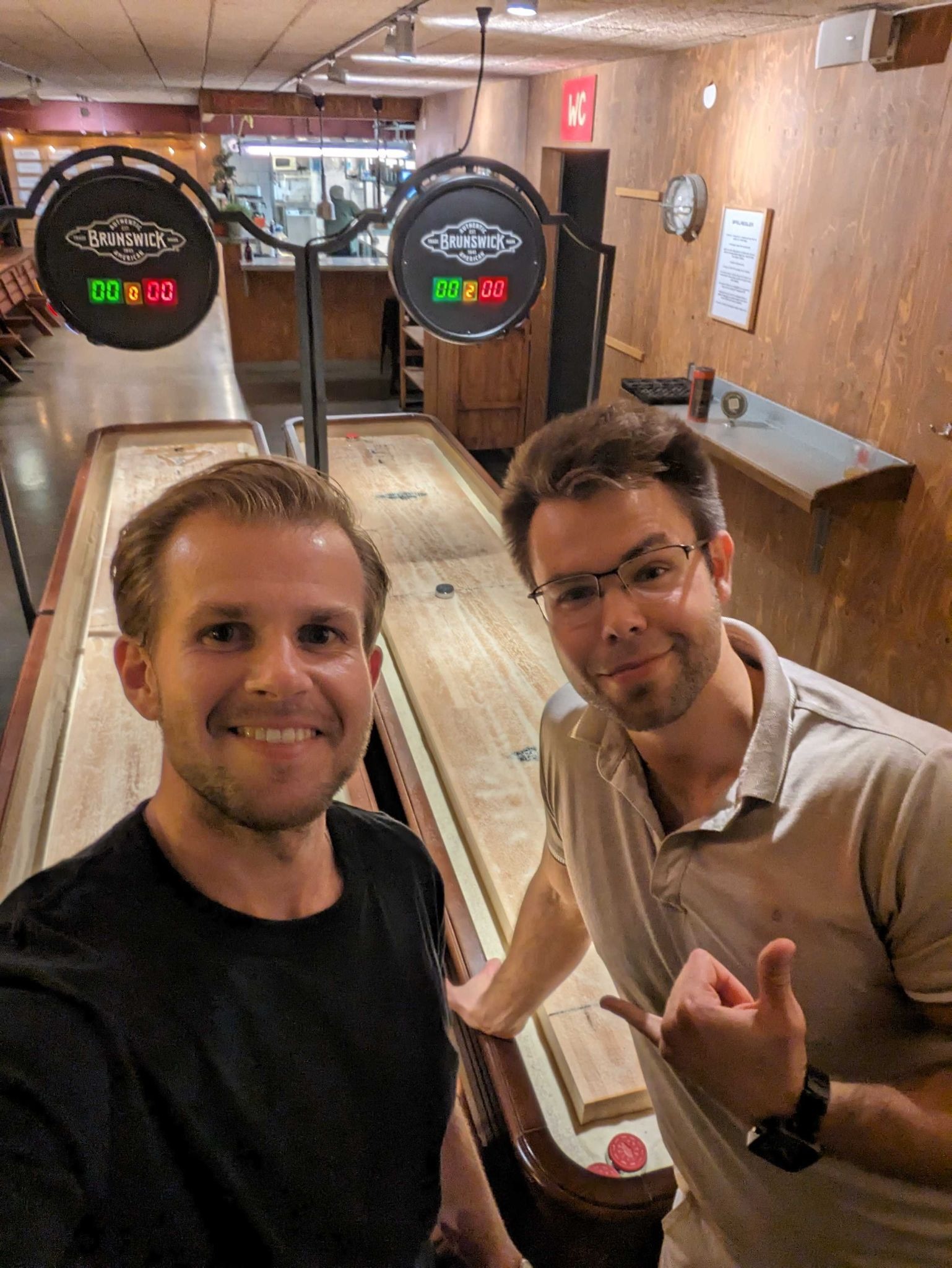
His co-founder, Fedor Stomakhin, joined as COO and brings a complementary software, ML, and data background, layered onto the operational and strategic functions a hardware company has to execute on early.

When we spent six months getting to know him, what stood out was not just the technical brilliance but the density of conviction. Juri has only ever wanted to start a company he could spend the next 10–15 years on. He works 16-hour days. He's pulled four people into 18 months of unpaid work because they believe in him. He told us he's willing to die to make Spiral succeed, and he meant it.
A wedge into a $200B feedstock market
They start with industrial buyers in feedstock markets (ammonia, refining, methanol) where customers care about one number above all else: levelized cost. Their first paid pilot, a 10 kW unit signed with SwitcH2 for offshore ammonia production at the Port of Rotterdam, is a perfect example of what the form factor unlocks: Spiral's energy density and modularity made it the only design that fit the envelope.

The long-term vision is bigger still: a future where green hydrogen is no longer the expensive alternative, but the default. If Spiral hits its targets, they don't just decarbonize ammonia, refining, steel, and methanol; they redraw the cost curve underneath the industrial economy.
We're proud to lead Spiral Hydrogen's €2.7M pre-seed round, alongside Norrsken Evolve and Superangel, backed by an additional €0.7M in non-dilutive grants. The capital takes Spiral from validated lab prototypes to a 10 kW pilot in the Port of Rotterdam and a 100 kW commercial module on the path to industrial scale.
Welcome to the byFounders family, Juri, Fedor, and the entire Spiral team.
Let's go build the cheapest hydrogen on Earth.
.jpeg)
.jpg)
Sign up to our newsletter.
Follow us


